Archive Overview
Igaku Keigo is the general medical discussion forming the first six volumes of Utsugi Kontai's (1779–1848) Kokun Iden, a collection of four works in 25 volumes. The project is structuring all 306 pages and examining relationships among Koho abdominal insight, the theoretical frameworks of six conformations, sanjiao, ministerial fire, and channels, and the MLMN layers.
The free viewer currently presents a coherent 24-page selection covering prefaces, postscripts, and the opening Wei section from the completed 306-page viewer. The full edition is being prepared for members.
Why Igaku Keigo Is Needed
Many Japanese Kampo works survive, but Igaku Keigo is a central reference here because it attempted to reposition the Koho school's empirical bodily observations within a broader theoretical system.
1. Theoretical Reconstruction of Clinical Insight
It repositions the Koho diagnostic perspective centered on toxin and abdominal diagnosis within traditional frameworks including the six conformations, sanjiao, ministerial fire, and channels.
2. Scope as a General Medical Treatise
It addresses questions spanning medicine as a whole, including the aims of learning, rectification of names, exterior/interior and inside/outside, eight items, three yin and three yang, pulse manifestations, and abdominal manifestations.
3. Integrating Six Conformations, Sanjiao, and Ministerial Fire
It offers clues for reading six-conformation differentiation, sanjiao differentiation, and ministerial-fire activity as a multilayer structure of clinical reasoning rather than separate frames.
4. Theoretical Position of Abdominal Diagnosis
The sixth volume's Discussion of Abdominal Manifestations matters as an attempt to integrate abdominal examination into general medicine rather than isolate it as palpation technique.
5. Connection with This Project
It directly overlaps MLMN's interest in connecting Koho abdominal insight with the theoretical frameworks of classical Chinese medicine.
Utsugi Kontai
Within the Koho lineage, Kontai inherited the clinical insight of Todo's “one toxin, myriad diseases” theory while attempting to discuss it together with more traditional frameworks of six conformations, sanjiao, ministerial fire, and channels. Although Koho medicine originally returned to bodily findings in reaction to later-formula schools' abstract theory, Kontai retained that empiricism while reintroducing Shanghan Lun-style systematic thought and warm-disease spatial understanding.
This stance indicates that his works attempted an integrated view across classical medicine rather than simply accumulating experiences. MLMN's central theme—connecting the deductive structures of classical Chinese medicine with Japanese Koho inductive observation—is also an attempt to reposition Kontai's work within a contemporary multilayer framework.
A Research Visit
Reporting the Beginning of the Research at His Grave
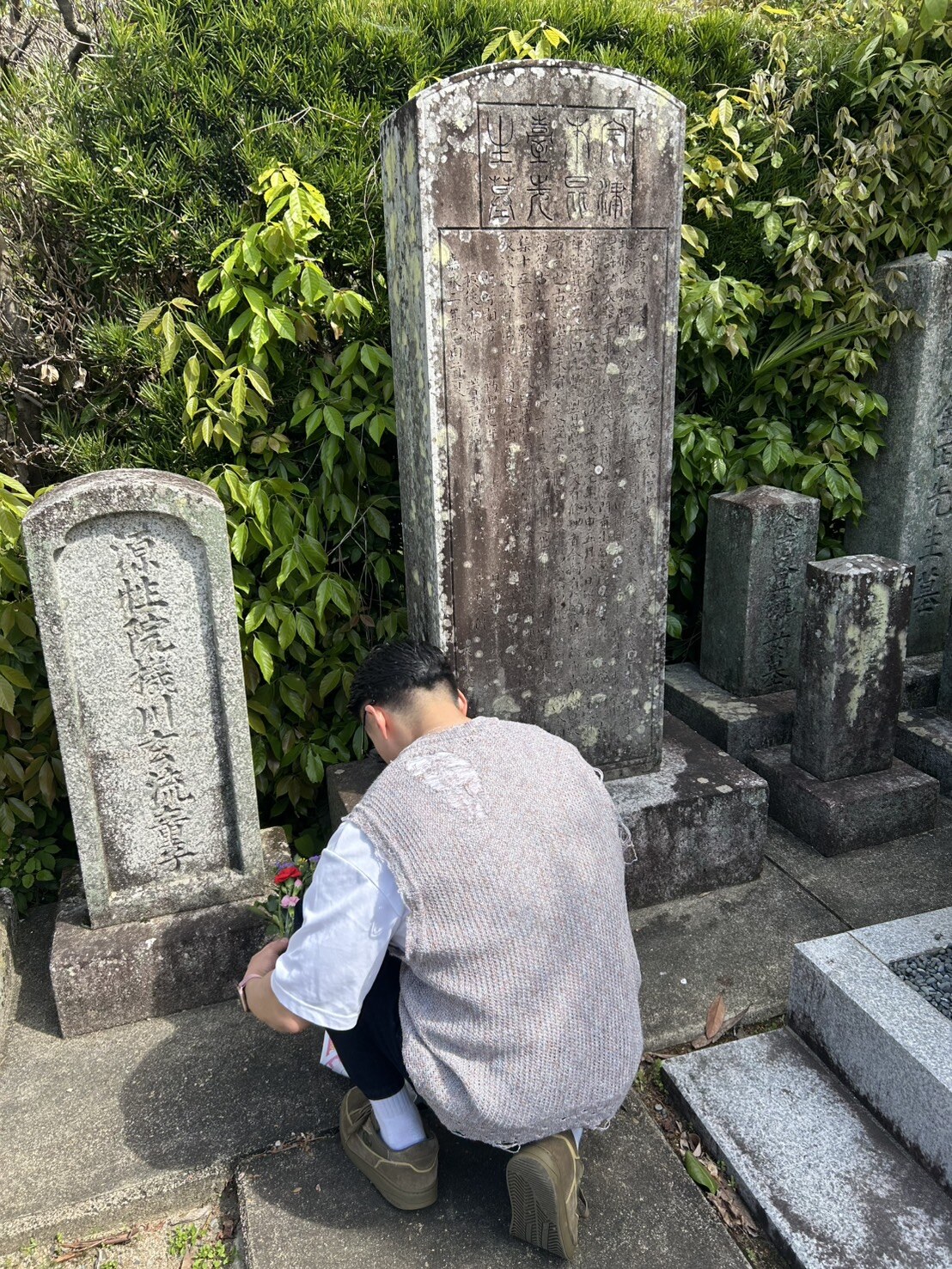
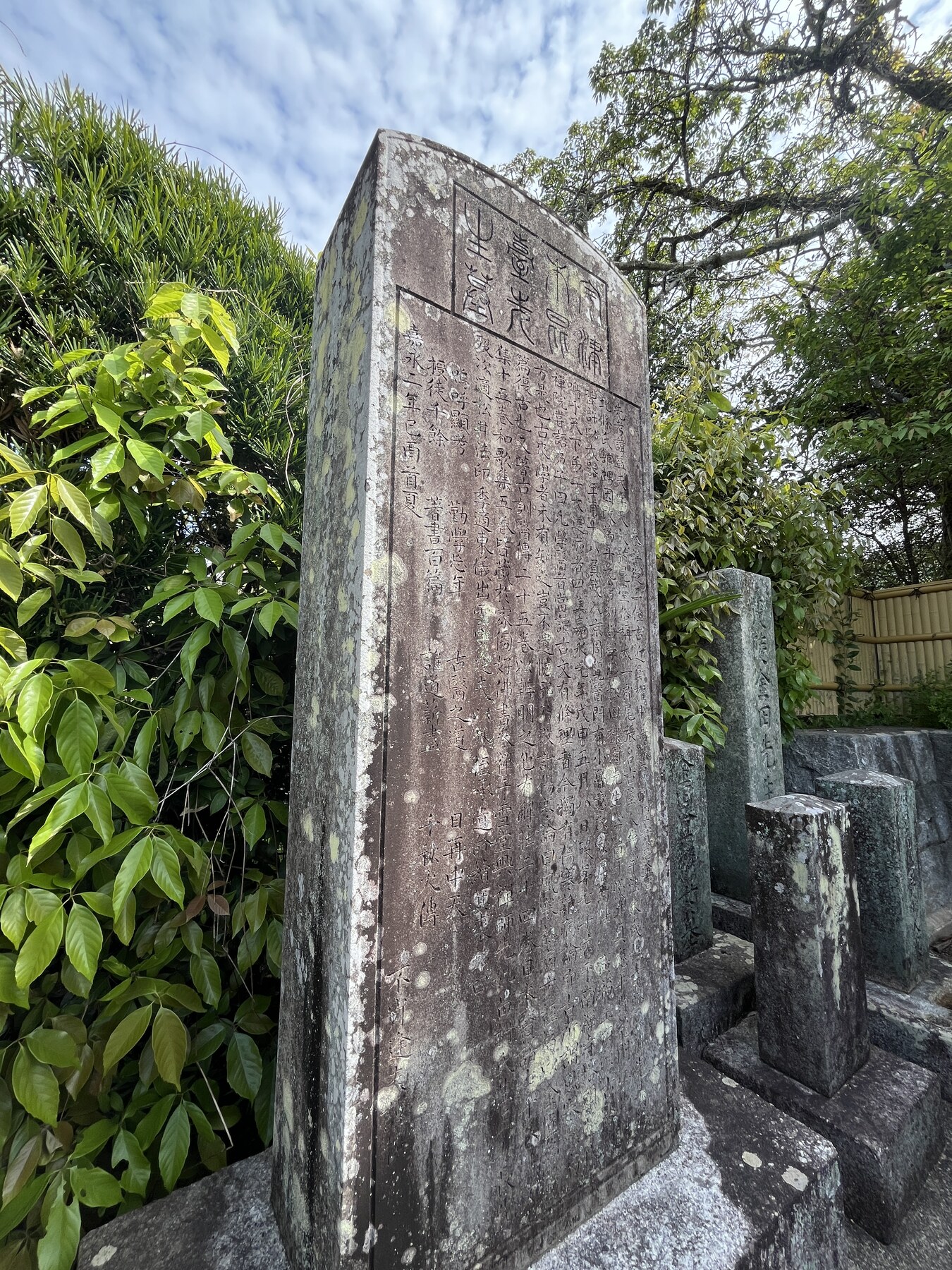
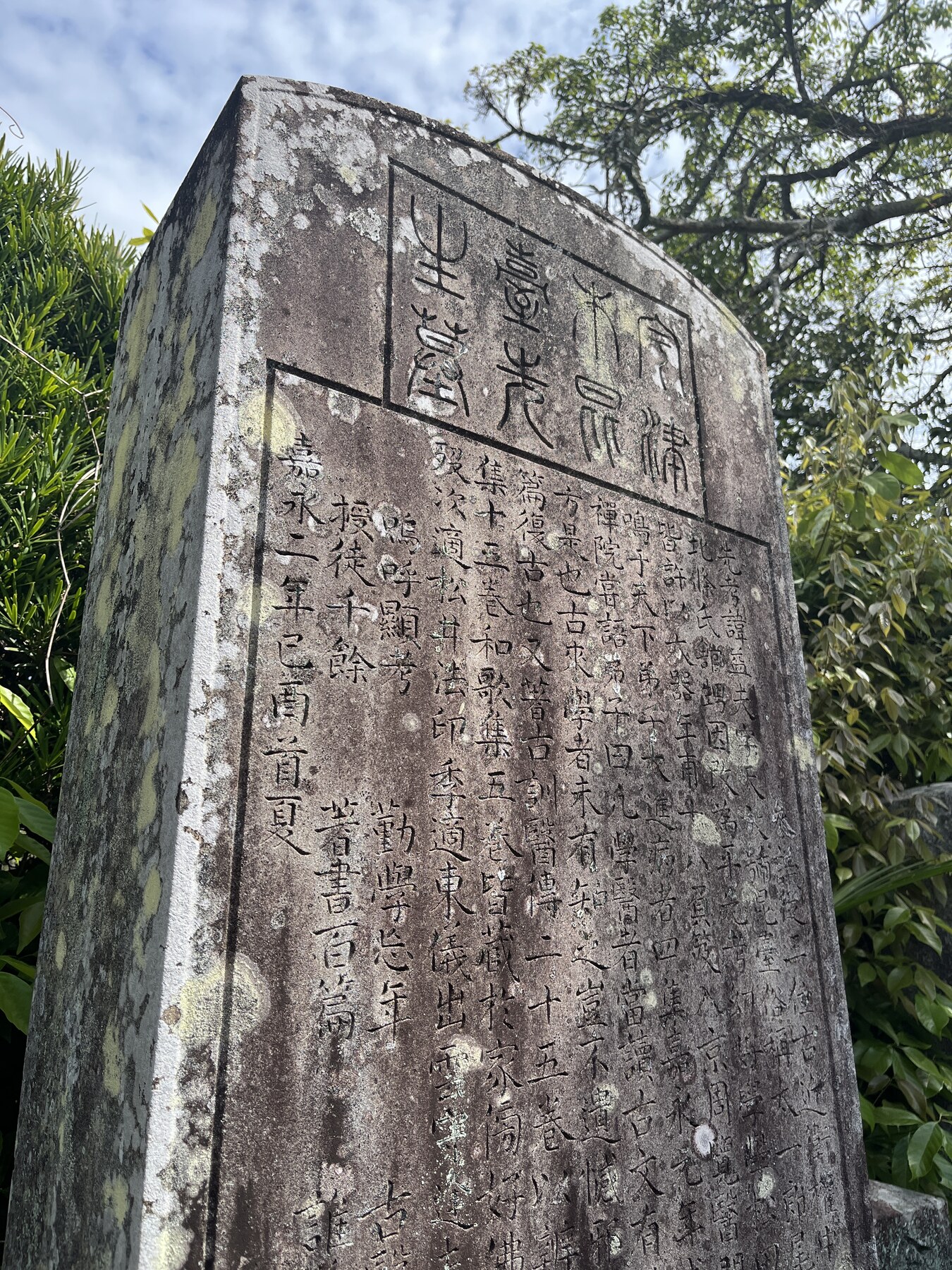
In writing papers and developing MLMN, I cite Kontai's works and connect his thought to contemporary clinical reasoning. Before pursuing this research fully, I visited his grave to report this intention rather than merely using the literature.
These photographs do not prove historical facts about Kontai. They are a researcher's record of respect for the author of the sources, and a reminder of responsibility: how to read his words, what to inherit, and where contemporary reconstruction begins.
Structure of Igaku Keigo
Igaku Keigo occupies the opening six volumes of the four-work, 25-volume Kokun Iden. It provides the theoretical foundation for the following Fukan Netsubyo Ho Keihen (seven volumes), Fukan Netsubyo Ho Ihen (seven volumes), and Yakuno Hoho Ben (five volumes). The volumes broadly address the following themes.
| Volume | Main Themes | Discussions Included |
|---|---|---|
| Volume 1 | Aims of learning; rectification of names; exterior/interior and inside/outside; wind, cold, and heat; eight items; three yin and three yang | Discussions of the aims of learning / names / exterior–interior–inside–outside / wind–cold–heat / eight items / three yin and three yang |
| Volume 2 | Pulse manifestations; zang-fu and channels; low-back pain and spinal stiffness | Discussions of pulse manifestations / zang-fu and channels / low-back pain and spinal stiffness |
| Volume 3 | Sanjiao, ministerial fire, qi, blood, body fluids, and other topics | Discussions of sanjiao / ministerial fire (volume 3 is missing in the Kyoto edition and supplemented from the Kawamura Collection, Shiga University of Medical Science) |
| Volume 4 | Continuation of various discussions | — |
| Volume 5 | Continuation of various discussions, including the discussion of medical colleagues | Discussion of Medical Colleagues (including variant title forms) |
| Volume 6 | Discussions of abdominal diagnosis | Discussions of abdominal manifestations, abdominal pain, and related topics |
Each ben (“discussion”) takes the form of a short systematic essay on a medical concept or clinical problem, combining classical quotations, development of Kontai's own views, and clinical examples in closely reasoned discussion.
Digitization within This Project
All six volumes and 306 pages are being prepared as structured data as follows.
Base Editions
- Kokun Iden, Igaku Keigo volumes 1–2 and 4–6, Kyoto University Rare Materials Digital Archive, Fujikawa Collection (shelfmark RB00000446)
- Kawamura Collection, Shiga University of Medical Science (to supplement volume 3 missing from the Kyoto edition)
Processing Steps
- Page-by-page acquisition of original images (all 306 pages).
- Page-level OCR with image-recognition AI.
- Preparation of page, volume, and chapter-title metadata.
- Alignment of OCR text and original images.
- Draft Japanese readings and modern Japanese translations for Batch01 (101 pages), at DRAFT stage.
- Extraction and classification of MLMN propositions, including cross-analysis with the Keihen, L1 propositions, and L9 temporal propositions.
What the Viewer Shows
The Batch01-connected viewer (101 records), based on the original interface, has been restored. It aligns original images, OCR, draft Japanese readings, and draft modern Japanese translations page by page.
Open the Free 24-Page Viewer Read the Preface and Translation
The full 306-page edition is being prepared for members. Please contact us if you wish to view it.
Published Text Gateways
The viewer offers a reading experience for images and parallel texts. Main units are also being published progressively as static HTML so that search engines can access the text.
Preface
Even if medical books survive, the art is lost without people able to use them. This introduces the central concern of Igaku Keigo.
Shuku, In, Hon, and Byo
The first four of the eight items, organizing constitution, initiating cause, location, and illness as suffering.
Free 24-Page Viewer
Compare the prefaces, postscripts, and opening Wei section through aligned original images, OCR, Japanese readings, and modern Japanese translations.
- OCR, Japanese readings, and modern Japanese translations have not reached the verified-text stage. Original comparison and specialist verification continue.
- The viewer has not been embedded in the main site; completion of quality verification is awaited.
- Publication and paid-service decisions undergo separate review.
Relationship to MLMN
Kontai's theoretical reconstruction may have multiple correspondences with the layers of the project's MLMN Theory . His six-conformation locations, yin–yang divisions, and pathological transitions are examined in relation to L6; whole-body sanjiao distribution to L7; qi/blood/fluid dynamics to L4. Ministerial fire is recorded not as an independent L8 but as a sourced mechanism connecting layers such as L1, L2, L3, L4, L7, and L9. Abdominal findings are placed across L0–L9 with original observations separated from candidate interpretations. These are provisional research placements, not established mappings. For details, see Abdominal Diagnosis Archive and MLMN Theory for further information.
Position within This Project
Igaku Keigo is a central reference for the project. Kontai's integrated discussion of six conformations, sanjiao, ministerial fire, and channels while retaining the Koho clinical perspective is a particularly important Japanese source for the MLMN multilayer structure. Further batches, verification of Japanese readings and modern translations, and original-image comparison will continue to clarify its theoretical scope.